[
Category
]
Hospitality Design
[
Duration
]
Aug 2024 - Dec 2024
[
Theme
]
Narrative-driven / Sensational
[
Type
]
Boutique Hotel Design
[
Size
]
4750 sqft
[
3d Modeling
]
Rhino
[
Rendering
]
Unreal Engine
[
Designed by
]
Hazel Yu
[
Designed by
]
Hazel Yu
[
Designed by
]
Hazel Yu
[
Designed by
]
Hazel Yu
[
Designed by
]
Hazel Yu
[
Designed by
]
Hazel Yu
[
Designed by
]
Hazel Yu
[
Designed by
]
Hazel Yu
Design Background
Thumbelina navigates through an unpredictable world—captured, confined, and ultimately freed into a realm of belonging—this boutique hotel creates a layered spatial experience, where visitors transition from mystery and enclosure to openness and delight.
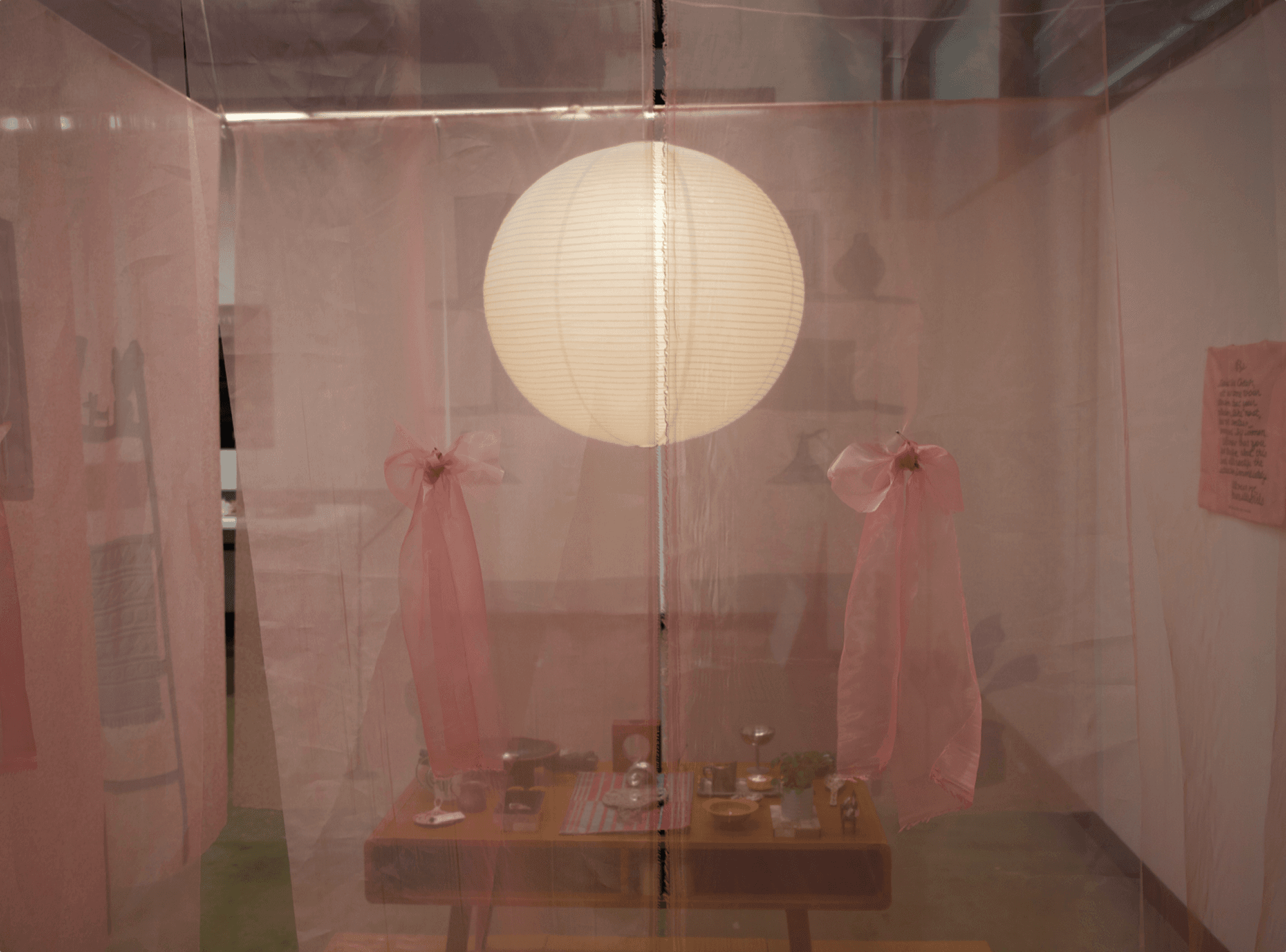
Rooted in Thumbelina, Thistle & Bloom draws from the story’s exploration of scale, shelter, and belonging—where a fragile protagonist navigates a world that is at once tender and overwhelming. Rather than retelling the narrative literally, the design extracts its emotional logic and spatial metaphors, translating them into a contemporary interior language.
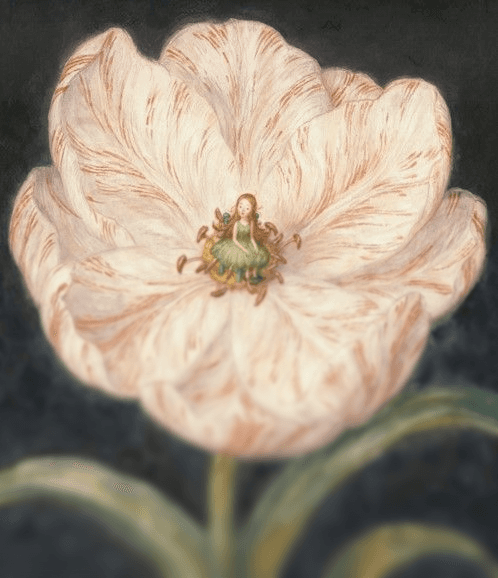
01
Born from a Flower
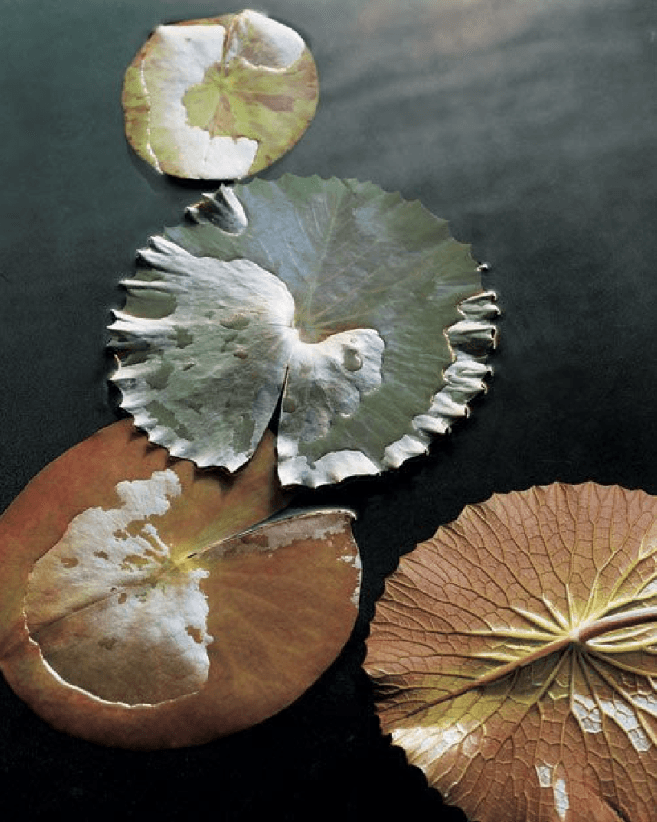
02
Carried by Nature
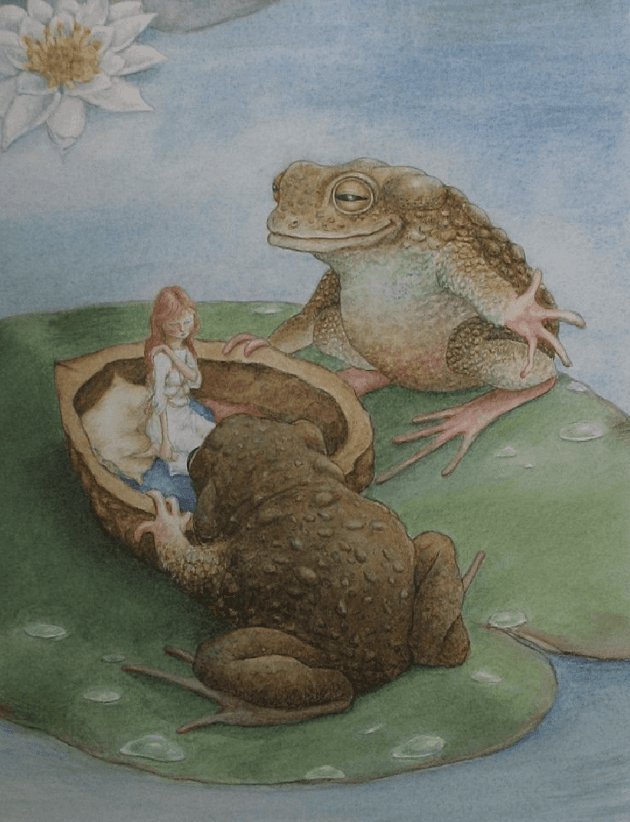
03
Nested Retreat
Design Experience
The design experience was structured as a journey rather than a collection of rooms. By organizing space through gradual transitions in scale, enclosure, and movement, the project explores how guests emotionally navigate an environment—from moments of compression and uncertainty to openness and relief.

Design Strategies
Thumbelina navigates through an unpredictable world—captured, confined, and ultimately freed into a realm of belonging—this boutique hotel creates a layered spatial experience, where visitors transition from mystery and enclosure to openness and delight.
01
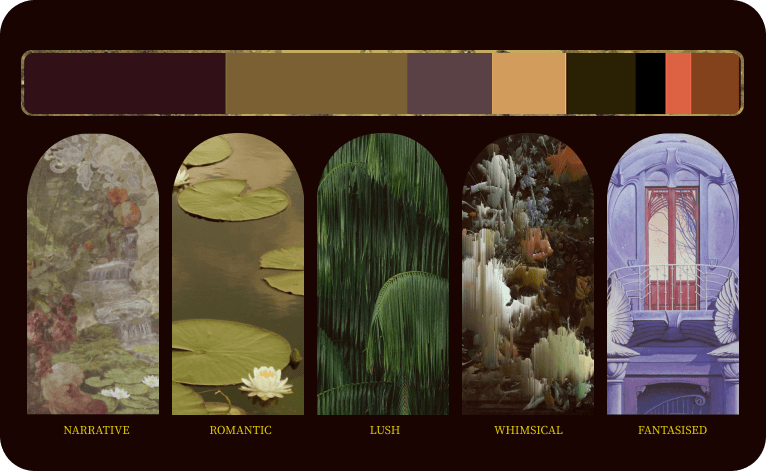
Material Strategy
We start with a detailed consultation to understand your vision and requirements, followed by precise space measurements to capture all necessary details.
02
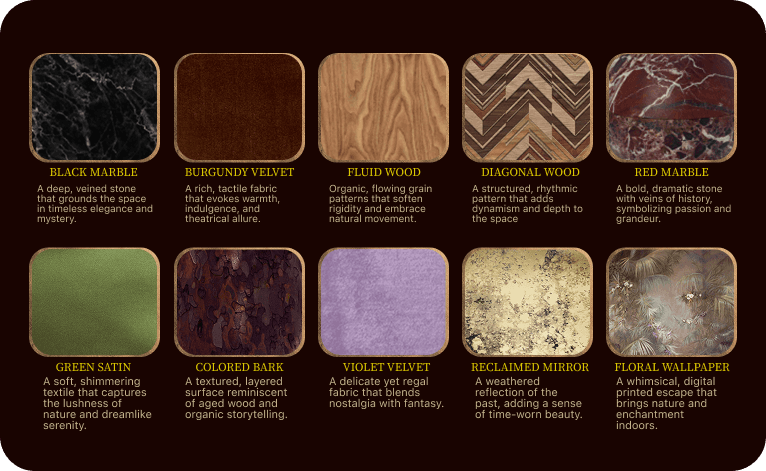
Concept Schemes
We create floor plans and 3D renderings to visualize the design, refine it with your feedback, and finalize materials and plans for a seamless execution.
03
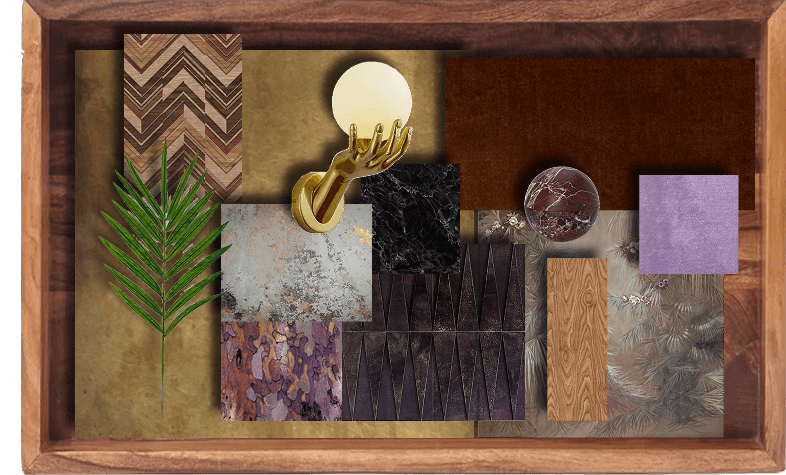
Material Palette
Our team oversees the construction and installation, ensuring everything adheres to the design plan and meets our high standards, handling any issues promptly.
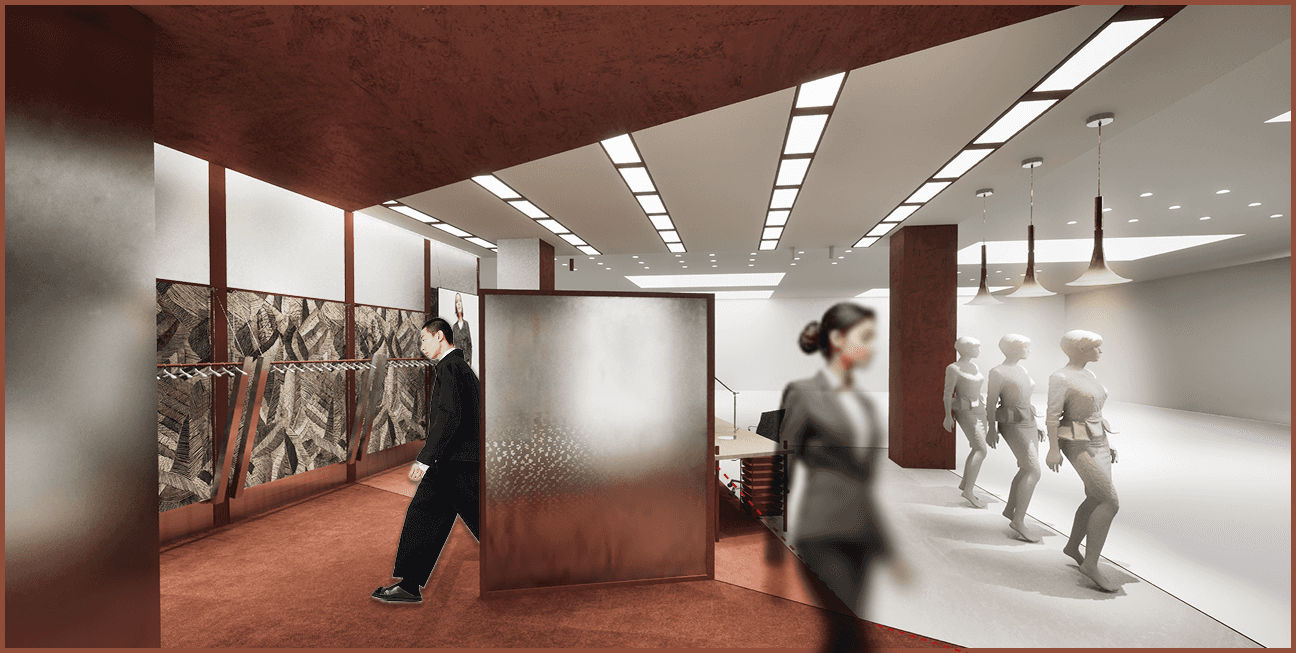
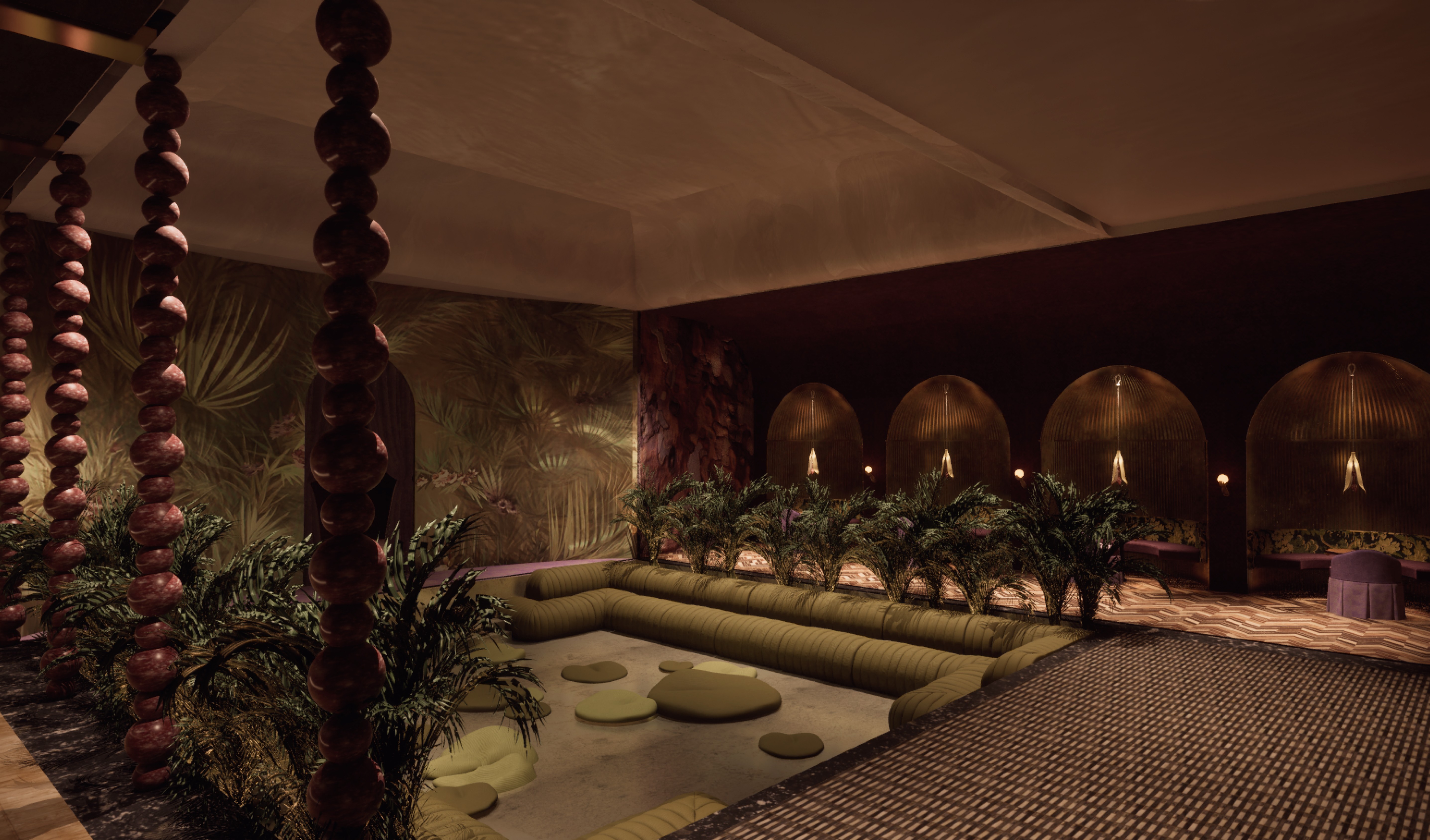
Lobby Rendered Perspective
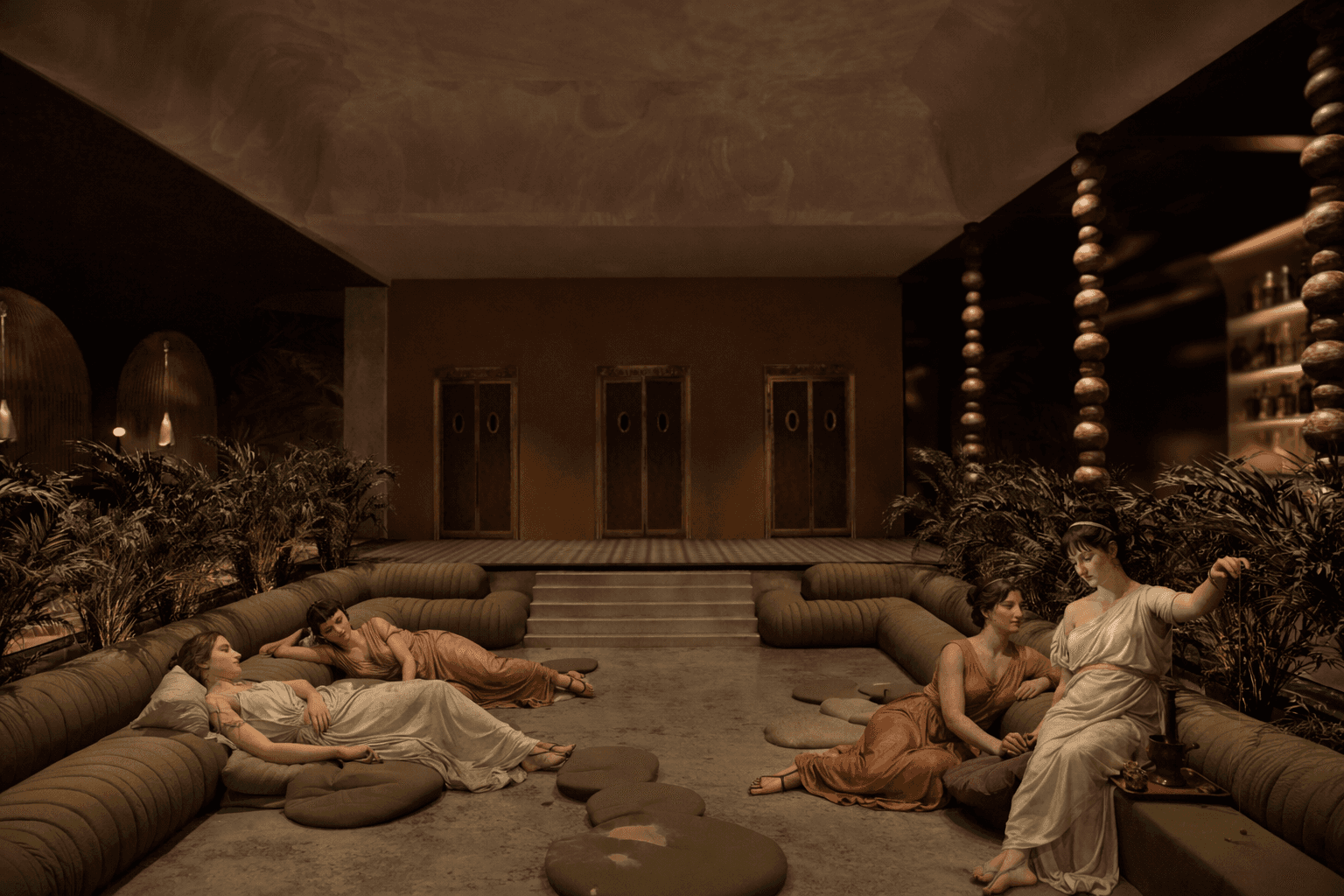
Design Story
These are people who have flexed a lot of creative muscle over the years in entertainment and fashion. They asked us to make the house less heavy and ornate, and more appropriate for modern family – something friendly and warm.”
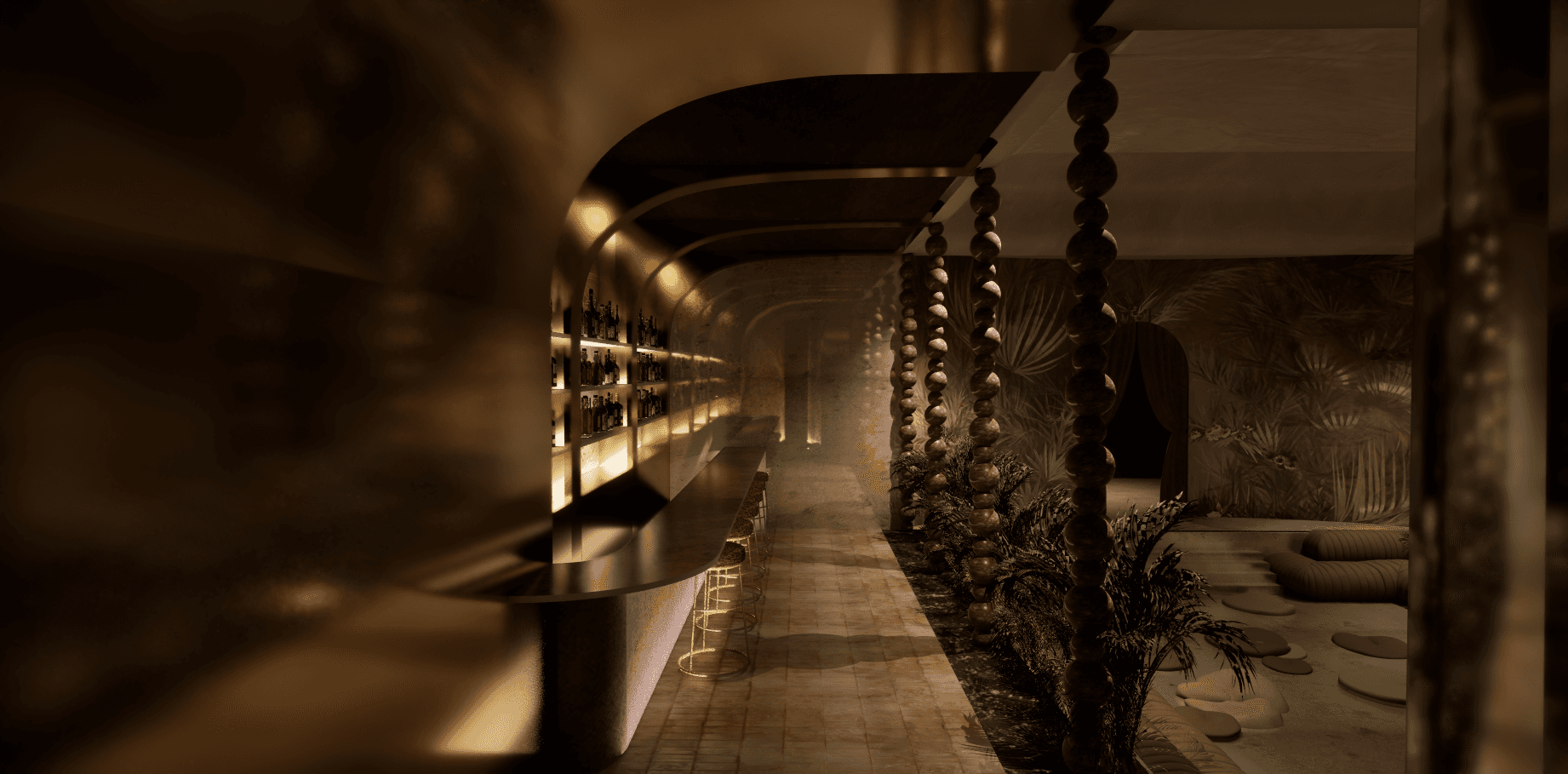
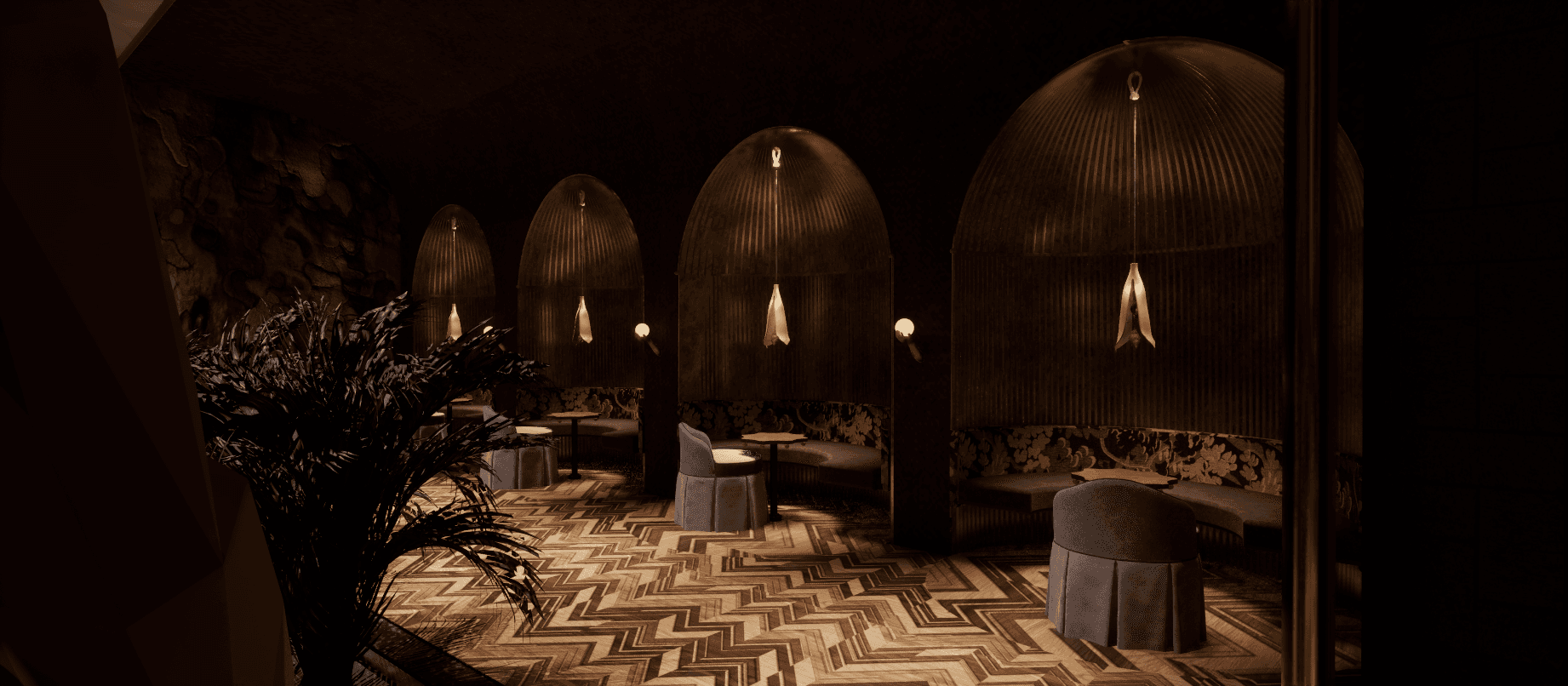
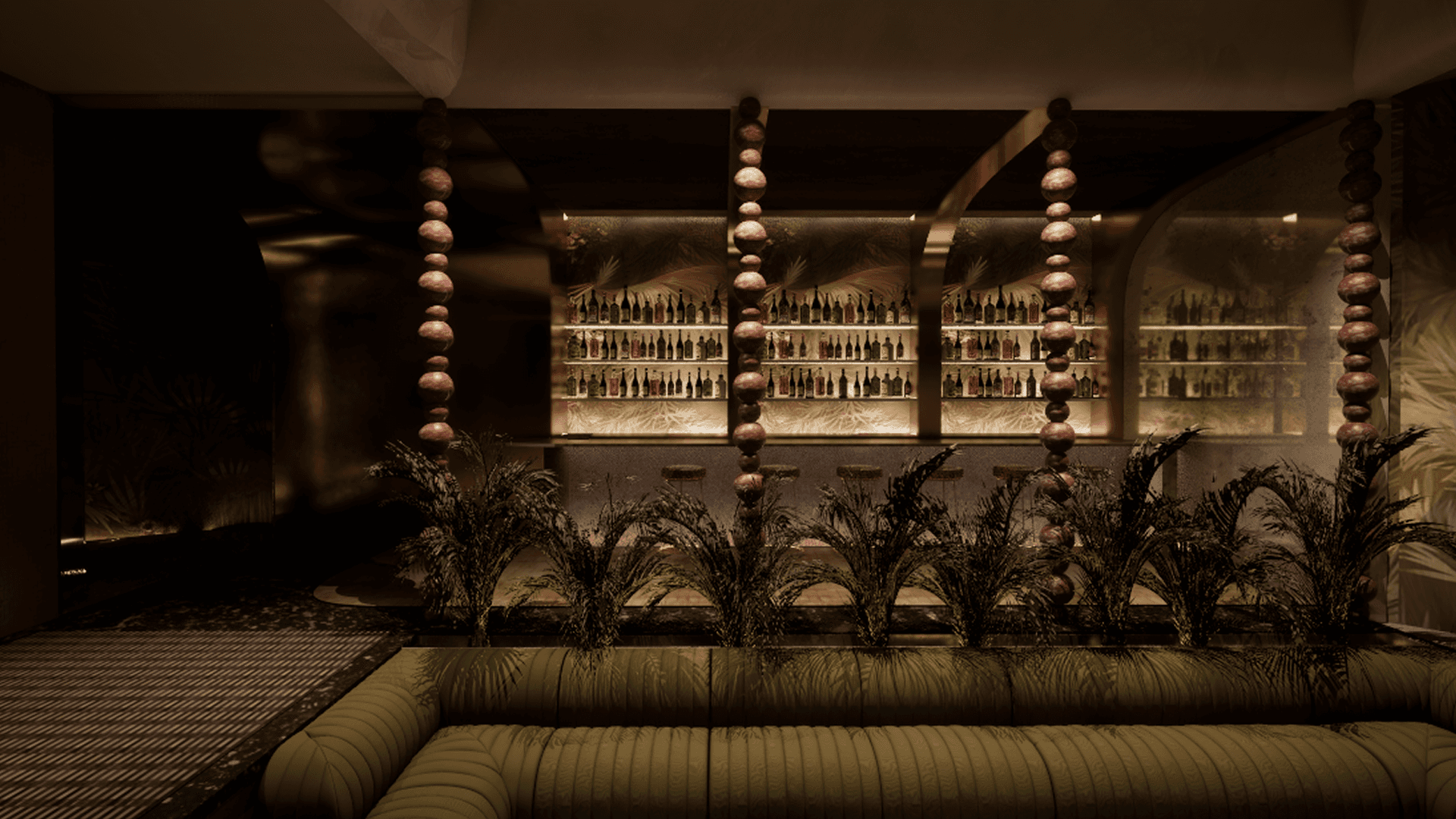
Cocatail Bar
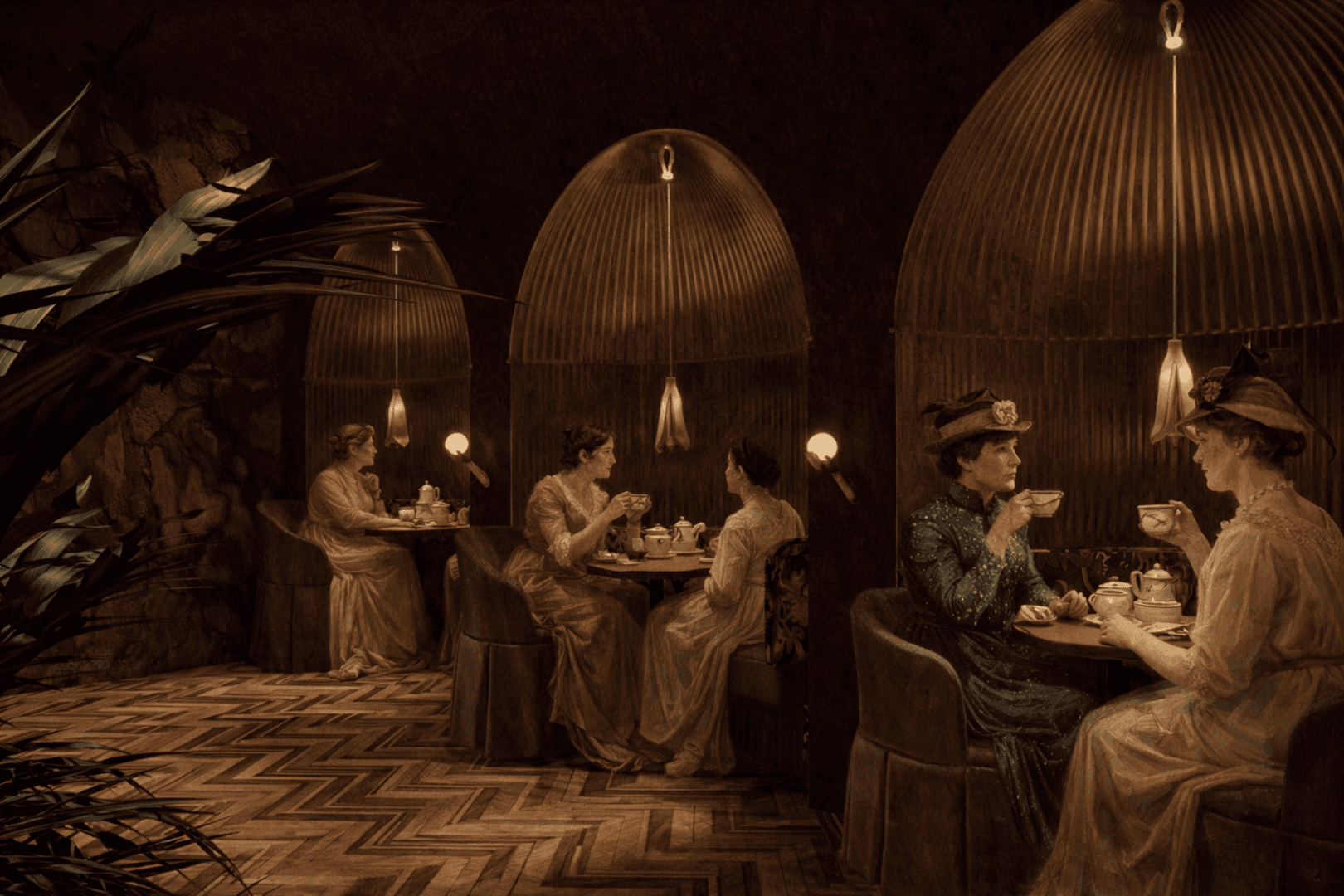
Private Booth
A Peak
“A lowered vantage point transforms the bar into a quiet spectacle—seen through shadow, framed by light.”
Guest Room
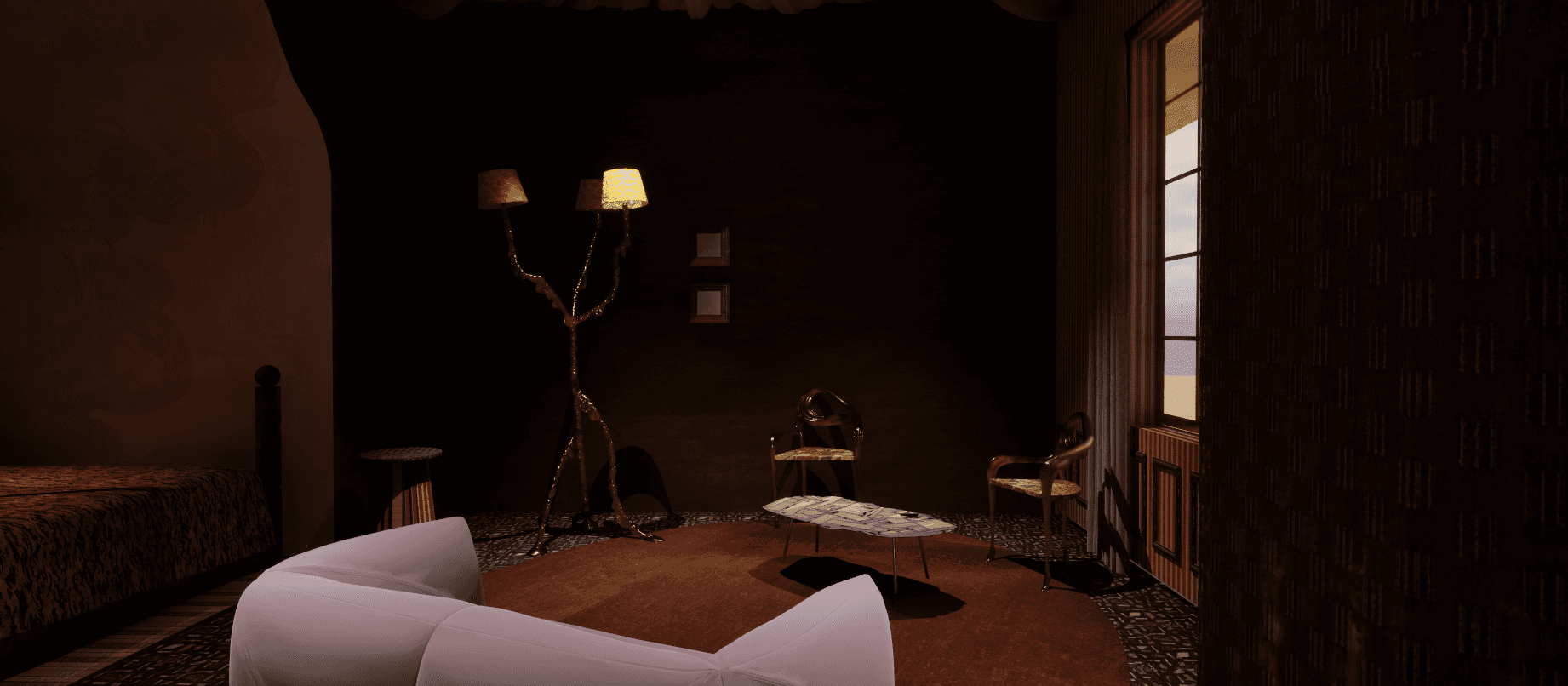
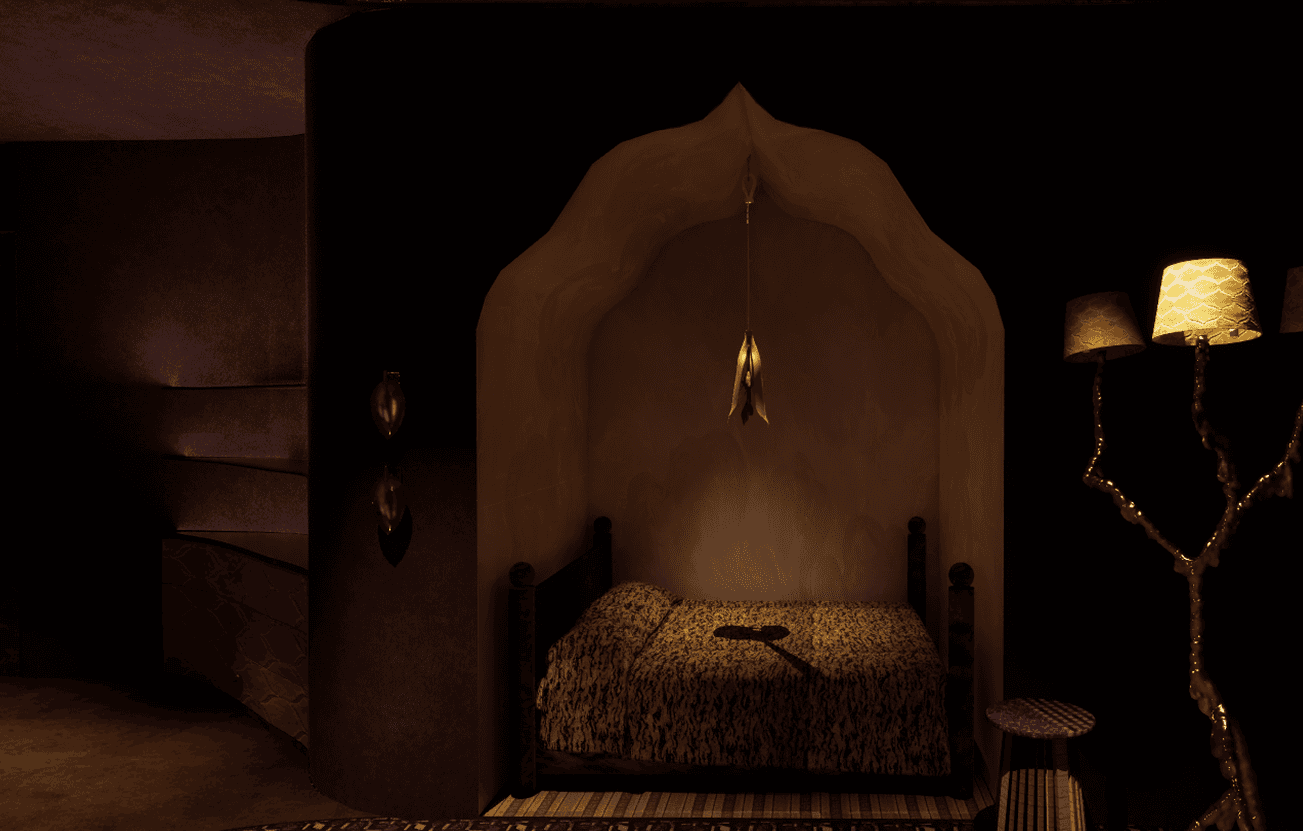
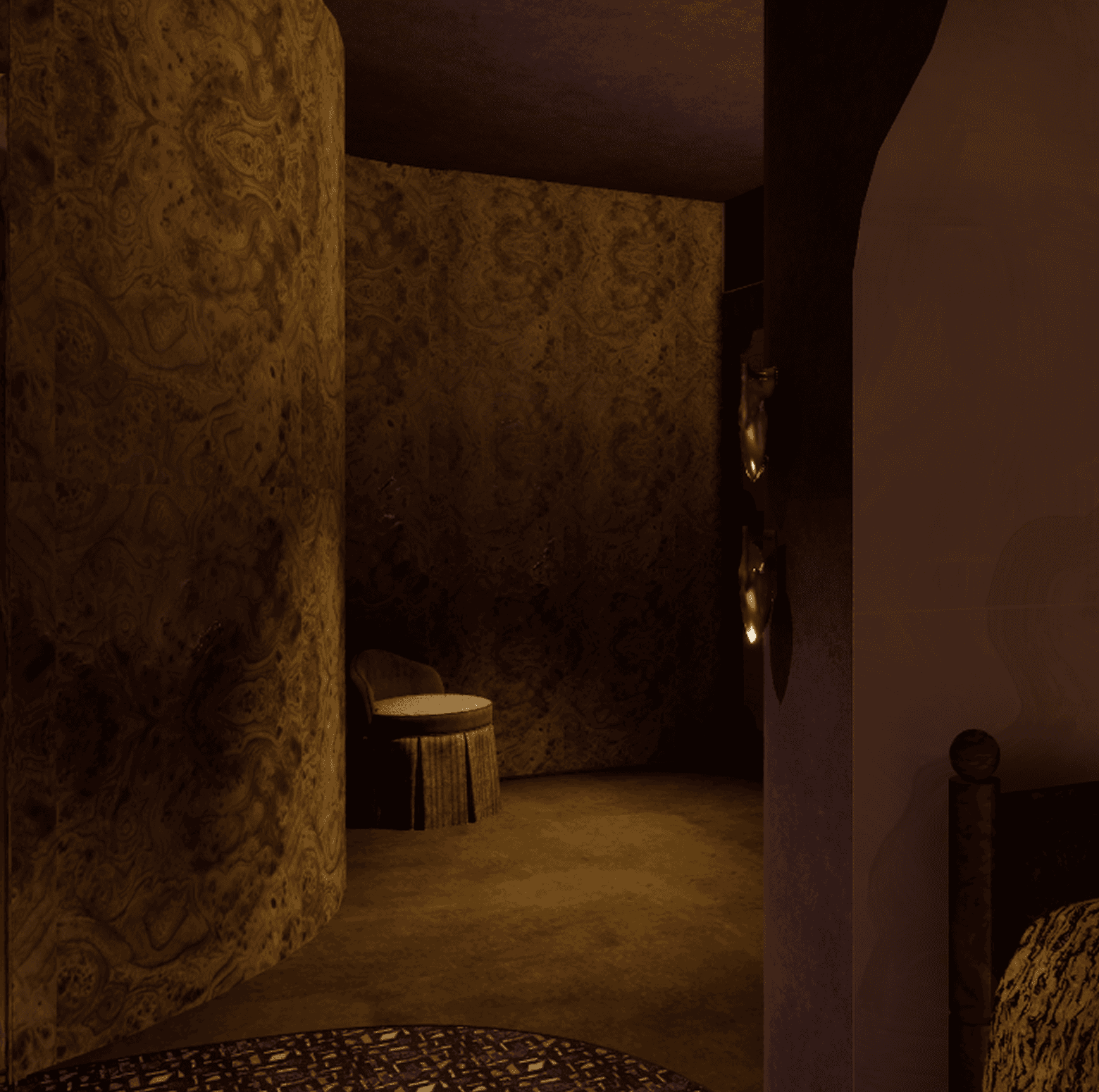
Stepping into the guest rooms of Thistle & Bloom is like entering a hidden storybook world—where textures, colors, and forms blend to create an enchanting, immersive escape. Inspired by Thumbelina’s journey, the space balances cozy intimacy and whimsical grandeur, inviting guests into a realm where nature and fantasy intertwine.
At the heart of the room, the sculptural alcove bed, framed by a gentle arch, cradles its occupant in a protective cocoon—much like the hollow of a tree or the soft petals of a flower embracing Thumbelina.
Overhead, handcrafted lighting, inspired by twisting vines and delicate branches, casts soft, dappled shadows, mimicking the play of light filtering through a forest canopy.
Guestroom
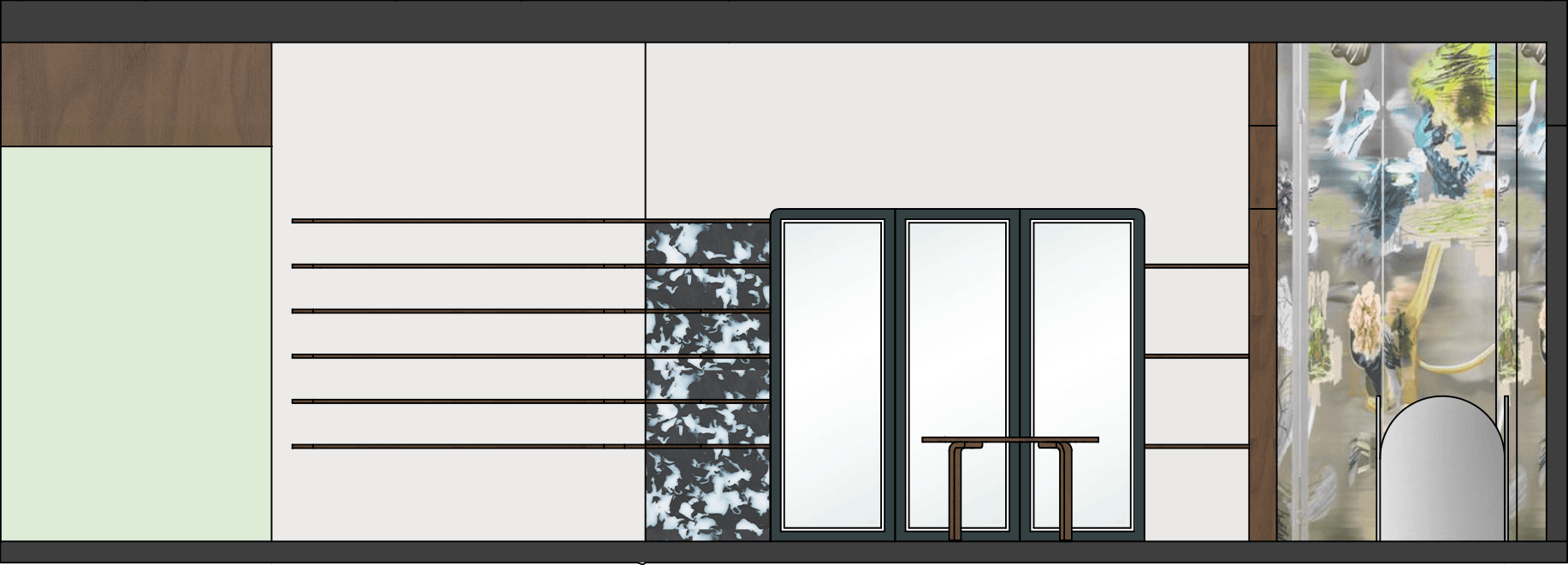
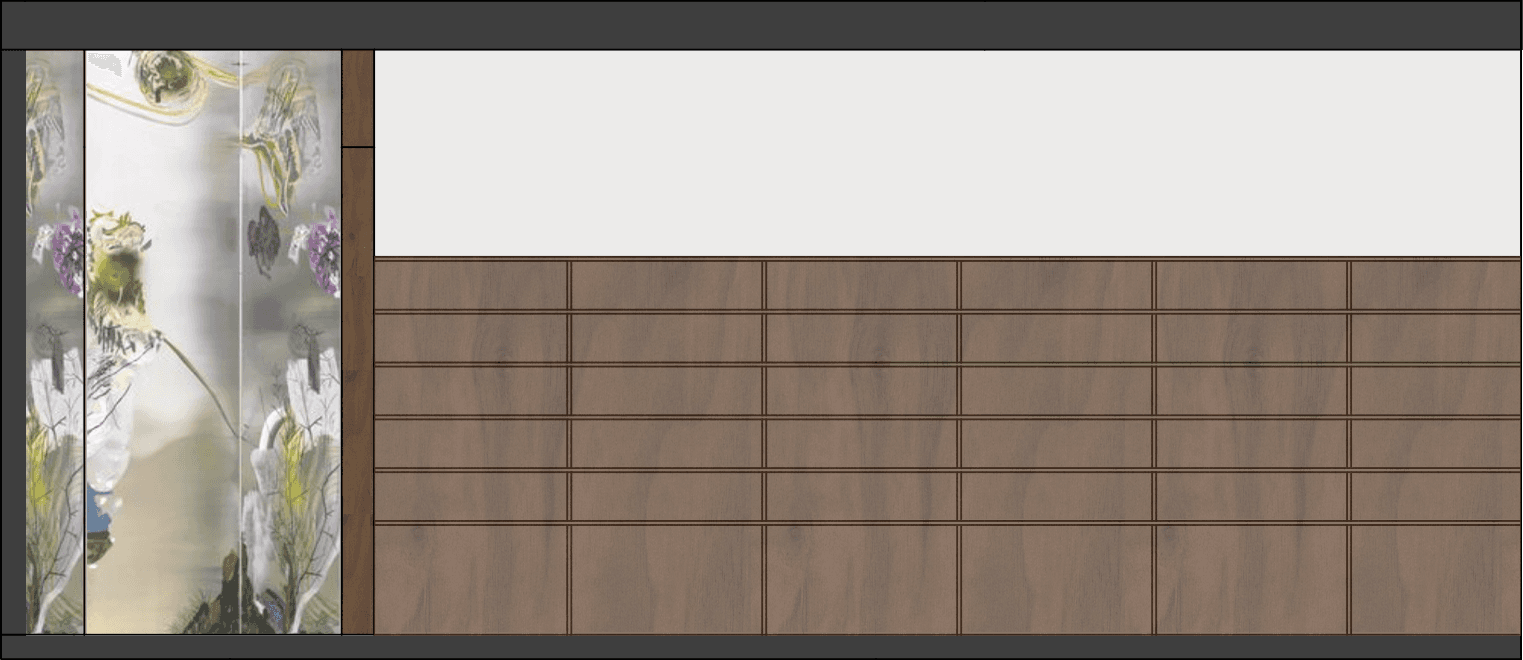
Material Plan
Design Story
“The guestroom unfolds not as a static enclosure, but as a quiet journey—
from compression to release, from concealment to belonging.”
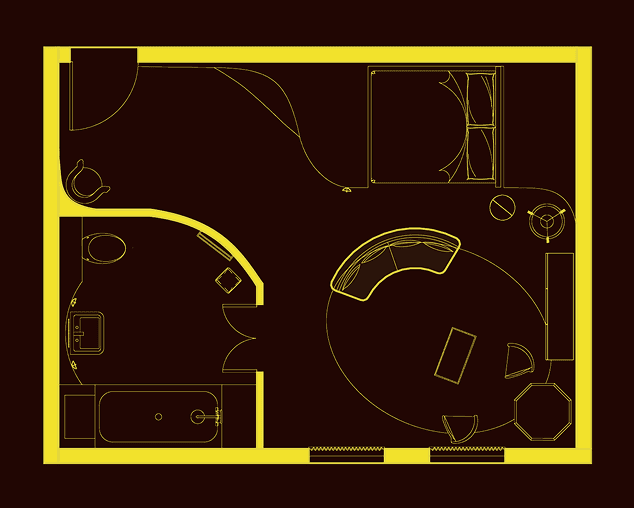
The guestroom is conceived as an immersive interior landscape shaped by thresholds, curvature, and controlled visibility. Rather than presenting the space all at once, the design choreographs a gradual reveal—where arched passages, softened edges, and layered textures guide the body inward. This sequence draws from Thumbelina’s journey, translating moments of uncertainty and refuge into spatial conditions that are felt physically rather than narrated explicitly.
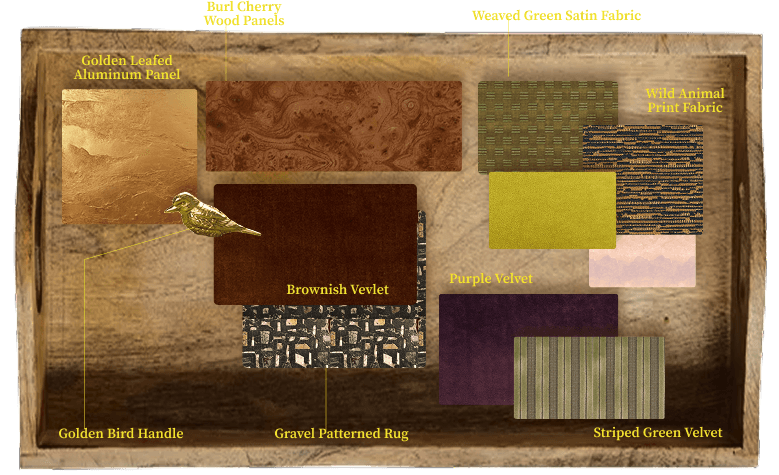
At the heart of the room, the built-in alcove bed becomes both furniture and architecture, functioning as a place of rest and emotional grounding. Material choices—velvets, carved wood, and muted metallic accents—enhance tactility and warmth, reinforcing a sense of enclosure without heaviness. Through this balance of intimacy and openness, the room invites guests to slow down, withdraw, and reconnect, positioning hospitality as an experience shaped by atmosphere, memory, and the body.
The End
“The journey finds its rest not in spectacle, but in belonging.
The space becomes home.”
More Projects